.jpeg)
A New Spring for Japanese Cuisine in New York— Why Kaiseki After Omakase?
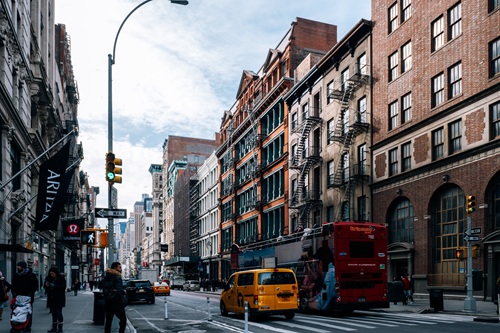
As the cherry blossoms in Central Park begin to form buds and a faint scent of spring drifts through the Manhattan air, a quiet yet unmistakable sign of a new season is also appearing in New York’s dining scene.
Over the past decade, Japanese cuisine in New York has evolved remarkably. Ramen and izakaya have become part of the city’s everyday food culture, while in the fine-dining sector, omakase sushi has firmly established itself. Today, the word omakase itself is widely recognized as a term representing a refined dining experience.
But a city devoted to gastronomy always moves to the next stage. Now that the omakase style has become established and diners’ expectations and understanding have deepened, a new development is beginning to emerge in New York’s Japanese dining scene: kaiseki-style tasting menus.
This movement can be seen as an attemptto reinterpret the terroir of New York—an international city—through the traditional framework of Japanese cuisine.
If sushi omakase is an experience that conveys the chef’s technique and the quality of ingredients in a direct and focused way, kaiseki goes one step further. It is a culinary experience constructed through the flow of dishes, seasonal expression, and harmony with tableware. In many ways, it represents the worldview of Japanese cuisine expressed through the structure of an entire course.
The background behind the growing interest in kaiseki as the next stage after sushi is explained in more detail in the following article.
So why are chefs and food enthusiasts in New York beginning to turn their attention to kaiseki now?
1. The Dining Experience Sought After Omakase
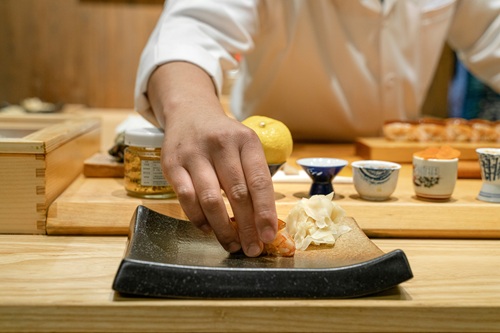
For more than a decade, omakase sushi has been the centerpiece of high-end Japanese dining in New York. The style—where a chef prepares and serves each piece of sushi one by one at the counter—has captivated diners as a highly engaging and live culinary experience.
However, many in the restaurant industry believe the scene has now entered its next phase.
Diners are no longer interested only in the technical skill behind sushi; they are increasingly interested in the structure of the entire meal. Kaiseki answers that demand perfectly.
Through a variety of dishes—sashimi, soup, grilled items, simmered dishes, and fried dishes—chefs can express their overall culinary philosophy and technical ability within a single course.
2. The Essence of Kaiseki — A Comprehensive Culinary Art
At the foundation of kaiseki lies the five fundamental techniques of Japanese cuisine:
- Raw (cutting)
- Grilling
- Simmering
- Steaming
- Frying
While sushi focuses primarily on the techniques of cutting and shaping, kaiseki develops a course by combining multiple cooking methods.
Each dish is not presented in isolation but as part of a carefully designed progression.
Courses such as sakizuke, wanmono, mukozuke, yakimono, nimono, and the final rice dish form a culinary narrative. This structure demonstrates not only the chef’s technique but also the organization and coordination of the entire kitchen.
Young chefs in New York are showing strong interest in this comprehensive approach to culinary composition.
3. Cooking “The Seasons of New York”
The kaiseki currently attracting attention in New York is not simply an attempt to replicate the seasons of Japan.
Instead, it reflects the idea of cooking New York’s seasons through the methods of Japanese cuisine.
Within a few hours of Manhattan are rich agricultural regions such as:
- Hudson Valley
- Upstate New York
- Long Island
More restaurants are incorporating ingredients from these regions into the structure of kaiseki courses.
This represents a new culinary expression that connects the traditions of Japanese cuisine with the terroir of America.
4. A Spring Dish Unique to New York
Consider a spring soup course.
Alongside kombu and bonito dashi, chefs might add a vegetable stock carefully extracted from wintered parsnips or celeriac. Floating in the clear broth is lightly seared Hudson Valley foie gras, allowing the aroma of the broth and the richness of the fat to merge in a delicate bowl.
In game dishes—often served as a shiizakana—Hudson Valley venison may be marinated in yūan sauce and grilled over binchotan charcoal.
Rather than finishing the dish with a red wine sauce, chefs may season it with soy sauce and citrus, placing local ingredients within the culinary context of Japanese cuisine.
Such dishes represent a form of kaiseki that could only emerge in New York.
5. Refined Minimalism
Another aspect of kaiseki that is gaining recognition in New York is minimalism.
By stripping dishes down to their essential elements and drawing out the inherent power of the ingredients, kaiseki resonates strongly with contemporary gastronomy.
The philosophy of respecting seasonal ingredients aligns closely with modern food culture values such as:
- sustainability
- local sourcing
- reduction of food waste
Many young chefs in New York are discovering hints about the future of food culture within the philosophy of Japanese cuisine.
Conclusion
The movement surrounding kaiseki in New York cannot yet be called a major trend. The number of restaurants is still limited, and interest is mainly concentrated among chefs and serious food enthusiasts.
However, one thing is clear: kaiseki is beginning to be reevaluated not simply as a traditional Japanese cuisine, but as a framework that expands a chef’s creative thinking.
As the next stage after sushi, kaiseki offers a deeper expression of Japanese culinary culture.
As the cherry blossoms of Central Park reach full bloom, chefs across New York are quietly exploring new possibilities for Japanese cuisine.
KIWAMI closely follows these changes in New York’s Japanese dining scene and provides early access to job opportunities at new and noteworthy restaurants.
For those who wish to gain experience in emerging areas of Japanese cuisine such as kaiseki, or deepen their culinary skills overseas, we offer career opportunities—including private listings.
Depending on your English proficiency and professional experience, we can introduce positions best suited to your career goals.
For overseas employment inquiries or career consultations, please contact us below.
Contact
hello@kiwami.io
Latest Job Listings
https://www.kiwami.io/job-listing
Register for free and take the next step in your career in the growing U.S. hospitality industry.