How Is Japanese Cuisine Changing in Boston? [2026 Edition] — A Market Quietly Beginning to Shift
Compared to New York and Los Angeles, Boston is not often discussed as a major Japanese food market. For a long time, it has been viewed as “stable, but with limited movement.”
However, that perception has begun to change in recent years. Rather than flashy new openings or overheated luxury expansion, what is happening is a quiet structural shift—arguably a more accurate reflection of the current reality.
Across the United States, the Japanese food market has entered a mature phase, with new concepts, high-end restaurants, and specialized formats continuing to emerge in cities such as New York, Los Angeles, and Boston. These nationwide trends are covered in our previous article, [Spring 2026] The State of Japanese Cuisine in the U.S.
Within this broader context, Boston stands out as a market that is not overheated like New York. Precisely because of this, its changes are often overlooked.
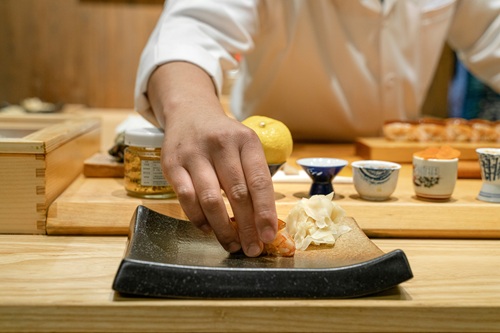
A symbolic example of this shift is the Michelin star awarded to 311 Omakase—the first of its kind in Boston. This was not just an award, but a signal that omakase in Boston is moving beyond a passing trend and becoming an established, respected dining category.
What 311 Omakase Represents
The Michelin recognition of 311 Omakase carries several implications for the industry.
First, it confirms that Boston can support high-priced sushi counter concepts.
Second, it shows that Japanese cuisine is beginning to be evaluated beyond the “ethnic” or “sushi” category—as a form of fine dining.
While New York already has an intensely competitive high-end sushi market, Boston has not yet reached that level of investment saturation. As a result, craftsmanship and quality are often more directly appreciated.
In that sense, 311 Omakase represents a meaningful turning point.
O Ya and the Growing Depth of High-End Japanese Dining
O Ya has long been a symbolic presence in Boston’s Japanese dining scene.
What is significant now is that, with the emergence of 311 Omakase, O Ya is no longer a singular standout. This indicates that the market is beginning to gain depth.
Boston does not have dozens of high-end counters competing as in New York, but a structure is gradually forming in which a small number of high-quality establishments are recognized and valued.
This shift may appear subtle, but its implications are substantial.
Boston: Not a Flashy Market, but a Stable One
One defining characteristic of Boston lies in its customer base:
- Academic communities including Harvard and MIT
- High-income professionals in biotech and healthcare
- Japanese corporate and expatriate demand
- A more conservative clientele that values quality
Unlike New York, which is often driven by trends and visibility, Boston tends to reward quality that endures quietly.
This is a critical factor for both restaurant operators and chefs.
Is Boston an Opportunity for Chefs?
From a talent perspective, there remains steady demand—particularly in high-end sushi and Japanese fine dining.
While there are fewer positions than in New York, the competitive structure is different.
For chefs who believe “New York is the only option,” Boston may be a market worth reevaluating. The presence of high-income customers also makes it easier for restaurants to sustain higher price points.
Could Boston Become the Next Growth Market?
Interestingly, Boston today resembles Washington, D.C. several years ago—an early-stage market gaining recognition.
As high-end Japanese concepts increase and the city’s reputation evolves, Boston may be entering a similar trajectory.
If this trend continues, Boston could soon be discussed as a “next emerging market.”
Conclusion
Boston’s Japanese food scene is not characterized by constant headlines or rapid expansion.
However, meaningful changes are taking place beneath the surface.
The Michelin star for 311 Omakase, the growing presence of high-end restaurants like O Ya, and a customer base that values quality all point to a market that is quietly maturing.
While it lacks the intensity of New York, it offers room for recognition and sustainable growth.
For chefs and industry observers alike, Boston is becoming a city that deserves closer attention.
At KIWAMI, we provide up-to-date job opportunities based on the evolving Japanese food markets across major U.S. cities.
We can recommend positions tailored to your experience and English proficiency.
If you are interested in working abroad or seeking career advice, please feel free to contact us:
Contact: hello@kiwami.io
Job listings: https://www.kiwami.io/job-listing