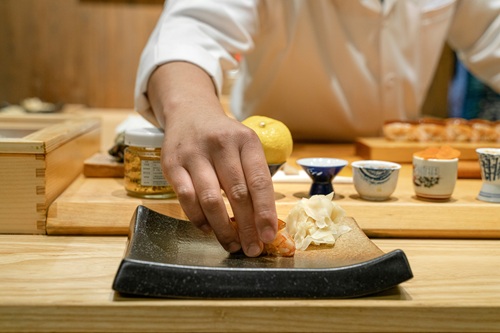
Working as a Japanese Chef in Cyprus: Visa, Jobs, and Salary Realities 【2026 Edition】 Cyprus: Its Strategic Position as a "Realistic Gateway" to Europe
When people discuss working in Europe, countries like France, Germany, or Austria usually come to mind first. However, in the real world of professional kitchens, the countries that remain "realistic" are limited once you consider visa difficulty and language barriers.
In recent years, Cyprus has steadily emerged as a viable option. While many perceive it primarily as a Mediterranean resort, the dining market—centered in Limassol and Nicosia—is expanding rapidly. An influx of affluent residents and business professionals from across Europe has raised the bar for culinary excellence.
Regarding Japanese cuisine, the market is not yet saturated. This means positions are available. However, Cyprus has a unique difficulty: it looks easy to enter, but many applicants get "stuck" in the process.
On the other hand, for projects where the conditions are properly organized, success is highly realistic. For instance, a new "Omakase" sushi counter project currently underway in Limassol is seeking a Sushi Head Chef with a salary starting from €7,000/month, offering a long-term role involved from the brand's launch.
→ https://www.kiwami.io/en/job-listings/282
Ultimately, the key to working in Cyprus is not just finding a "market" but ensuring the "conditions for progress" are actually met.
Why Cyprus Visas Often Stall Despite Their Simplicity
For Japanese nationals to work in Cyprus, the employer must act as a sponsor to obtain a work permit. The system itself is not complex and does not use a points-based evaluation like Austria.
However, a frequent issue on the ground is the "Ghost Offer"—where a candidate is hired, but the process never moves forward.
The cause is usually execution, not the system. Administrative procedures in Cyprus can be inconsistent, meaning the speed and success rate of an application depend heavily on the employer's experience.
- Restaurants with a track record of hiring foreign talent usually proceed without issue.
- Employers hiring from abroad for the first time often see the process grind to a halt due to paperwork errors or lack of follow-through.
In short, while the visa difficulty is low, Cyprus is a market where the specific employer you choose determines the outcome.
What is Expected of a Japanese Chef?
While Cyprus lacks the rigid point systems found in Austria, there are clear practical expectations. Employers are not looking for trainees; they want chefs who can step into the kitchen on day one.
- Operational Skills: You are expected to handle everything from prep (shikomi) to service, maintaining quality even during peak hours.
- Experience: 3 to 5 years is the general benchmark, but "reliability" is more important. For sushi, counter experience is vital; for general Washoku, an understanding of course flow is essential.
- Language: Unlike the high barrier of German, basic English communication is usually sufficient. This makes Cyprus one of the most accessible European countries in terms of language.
The Reality of Salaries and Living Costs
It is important to understand the salary structure before committing to Cyprus. Wages are not the highest in Europe; if you compare them to the US or parts of Western Europe, you may feel a gap.
However, this must be balanced against the cost of living. Rent and daily expenses are relatively lower, allowing for a comfortable lifestyle. Furthermore, depending on the establishment, tips and performance incentives can significantly boost your income, so looking only at the "base salary" on paper may not tell the whole story.
Cyprus vs. Austria: Choosing Your Strategy
Though both are in Europe, Austria and Cyprus represent entirely different markets:
- Austria: Clear rules, high barriers. It is a "gatekeeper" system where your eligibility is determined before you even start.
- Cyprus: Simple rules, inconsistent execution. It is a market where the door looks wide open, but you need an employer with the "power" to push you through it.
Neither is objectively better; the right choice depends on your current career stage and goals.
How to Screen Job Offers
When looking for work in Cyprus, you must look beyond the salary. The two most critical questions to ask are:
- Does the restaurant have a history of successfully hiring foreign nationals?
- Is the visa process clearly established within their HR department?
If these points are vague, the project may fail regardless of how good the salary looks. If these points are clear, the process is usually smooth and predictable.
Conclusion
Working in Cyprus as a Japanese chef is an option that "looks easy but requires careful vetting." Because the process relies heavily on the employer's experience, the same candidate can get two completely different results depending on the restaurant.
You need to bring immediate practical skills, not a desire for training. More importantly, you must be able to judge the background of the offer—specifically the visa track record and the readiness of the process.
Cyprus occupies a unique niche, distinct from the institutional stability of Austria. In this market, choosing the right job offer is the job itself. For those looking to build a professional record in Europe, a well-vetted offer in Cyprus is a strategic and realistic move.
At KIWAMI, we leverage our deep understanding of the European market to select only those job offers that are actually viable. We go beyond the "conditions" to evaluate the "process and feasibility."
Inquiries & Consultations: hello@kiwami.io
Latest Job Listings: https://www.kiwami.io/job-listing
Register for Free Here — Check the latest available European job openings and start your journey today.