The Potential of Kaiseki in Vienna — Why Now Is the Moment to Become a First Mover in the Central European Market
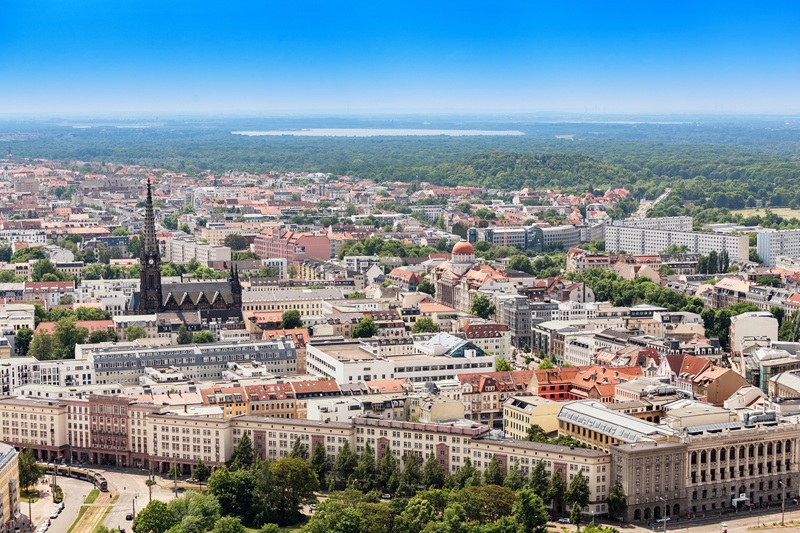
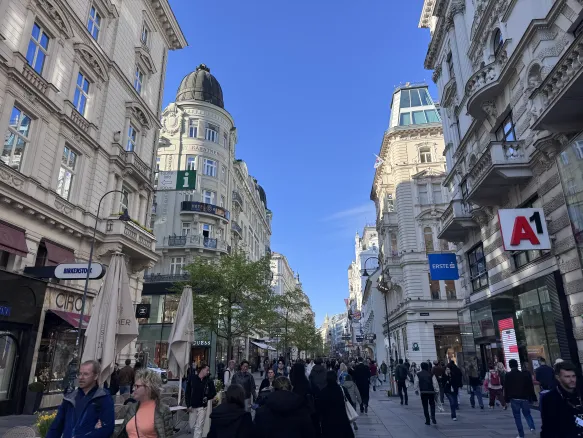
Austria, and Vienna in particular, is a city with a distinctive food culture even within Europe. The depth of tradition symbolized by classical music and imperial heritage coexists with a strong sensitivity to modern gastronomy.
In this city, Japanese cuisine is now clearly entering its “next phase.”
The growing presence of kaiseki in Europe has been discussed previously, but unlike mature markets such as London or Paris, Vienna represents an “intermediate market” — one that is still developing, yet already capable of sustaining demand for high-value dining experiences.
This structural position is what makes Vienna especially significant for kaiseki.
This article examines the “structural shift” currently taking place in Vienna’s Japanese dining scene, alongside an analysis of key establishments.
Current State of the Market: A Mid-Maturity Position
If Vienna’s Japanese food scene can be summarized in one phrase, it is this: “expanding, but not yet deep.”
It is neither a highly competitive, saturated market like London or Paris, nor an undeveloped frontier like parts of Eastern Europe.
With a population of around 2 million, and a steady presence of affluent residents and international visitors, the foundation for high-end dining is already in place.
The market can currently be divided into three layers:
1. Casual Segment (Expansion Phase)
Dominated by Asian-operated establishments, often focused on buffets and takeout. This segment has spread the perception of sushi as “affordable and convenient.”
2. Modern Casual (Maturity Phase)
Represented by brands like Mochi, featuring visually appealing sushi rolls and creative Japanese-inspired cuisine. Highly popular among younger and trend-sensitive locals, this segment reflects a “Europeanized” evolution of sushi.
3. High-End / Omakase (Transition Phase)
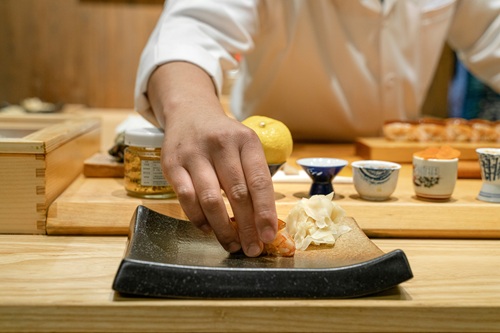
The most dynamic segment as of 2026. The introduction of limited-seat omakase counters—such as SHIKI’s 8-seat concept—has established a new value system: paying not just for food, but for a live, immersive dining experience.
Where the Market Is Filled — and Where It Is Still Open
The structure becomes clearer when examining key restaurants:
SHIKI Japanese Fine Dining
Positioned at the top of Vienna’s high-end Japanese dining scene. Recognized by Michelin and Gault & Millau, it has established itself as a cultural experience for affluent clientele. Its omakase counter introduced a new consumer behavior: valuing time spent directly with the chef. However, its style reflects a European interpretation of Japanese fine dining rather than a purely traditional approach.
Mochi
One of Vienna’s most successful casual Japanese brands. Also listed in the Michelin Bib Gourmand, it enjoys strong local support. It represents a refined form of “European-style sushi,” but operates on a completely different axis from kaiseki.
Traditional establishments such as NihonBashi and Daihachi Sushi
These restaurants provide classic sushi and set meals, forming the foundation of Japanese cuisine in Vienna. They are also supported by the Japanese expatriate community.
Restaurant Sakai
One of the few establishments practicing a kaiseki-style approach. Its seasonally driven course menus, prepared by a Japanese chef, offer perhaps the closest experience to authentic kaiseki in Vienna. However, this category remains extremely limited—almost a blank space in the market.
The conclusion is clear:
the pure kaiseki position remains largely unoccupied.
Why Kaiseki Can Succeed in Vienna
At first glance, Vienna may seem culturally distant from Japanese cuisine. However, several factors make it highly compatible with kaiseki:
Alignment with Course Dining Culture
Vienna has a long-standing tradition of multi-course meals. The concept of small, sequential dishes aligns naturally with kaiseki.
Deep Appreciation for Seasonality
Seasonal ingredients such as white asparagus (Spargel) and game are central to Viennese cuisine. The concept of “shun” (seasonality) is intuitively understood.
Integration with Wine Culture
Austria is one of the world’s leading white wine producers, and Vienna is unique as a capital city with its own vineyards. Pairing culture is already well developed, creating opportunities to combine kaiseki with local wines such as Grüner Veltliner.
Willingness to Pay for Experience
Viennese culture, shaped by opera and the arts, already values time, space, and narrative as part of the experience.
Not a Market to Compete in — but a Market to Define
In the United States, demand for kaiseki exists within an already mature market. In London and Paris, competitive structures are well established.
Vienna, by contrast, is still in the process of defining what kaiseki means.
This represents a rare opportunity—not to compete within a category, but to define it.
What Will Be Required
Success in Vienna will require more than technical skill.
In addition to mastering Japanese techniques such as dashi and seasonal composition, chefs must integrate presentation, spatial design, and a deep respect for local ingredients and wine culture.
Those who can synthesize these elements will be the ones who define kaiseki in this market.
Conclusion
Vienna’s Japanese dining scene is clearly transitioning toward a new phase centered on experiential value.
In a city with a deep-rooted culture of course dining, kaiseki—an art form built on seasonality and narrative—is beginning to attract attention as a highly compatible form of gastronomy.
Yet its true value has not been fully defined. This leaves a significant opportunity for those who seek not only to enter a market, but to shape it.
Unlike the mature U.S. market, Vienna offers a rare “undefined potential.”
KIWAMI introduces career opportunities for chefs seeking to expand into new markets across the United States and Europe.
For those who aspire not only to work within established environments but to help create new ones, please feel free to reach out:
Contact: hello@kiwami.io
Job listings: https://www.kiwami.io/job-listing
Free registration: https://apply.kiwami.io/