How Japanese Cuisine Is Changing in Florida, Miami, and Orlando [2026 Edition] — Florida’s Japanese Dining Market Is Moving to the Next Stage
Florida’s Japanese Food Market Is Entering a New Phase — How Miami and Orlando Are Changing Differently
Florida’s Japanese food market can no longer be summarized simply as “sushi is popular in tourist destinations.” In 2025, the MICHELIN Guide Florida expanded beyond Miami, Orlando, and Tampa to include Greater Fort Lauderdale, Palm Beach, and St. Pete–Clearwater. This expansion reflects the growing depth and maturity of the state’s restaurant industry as a whole.
Within that shift, Japanese cuisine is increasingly being viewed not merely as one category of Asian food, but as a high-value dining segment that includes omakase, course experiences, hospitality, and spatial design. Looking at Florida’s Michelin-starred restaurants, Japanese establishments such as Ogawa and Shingo in Miami, along with Sorekara, Kadence, and Natsu in Orlando, are strengthening their presence while developing distinct identities tied to each city.
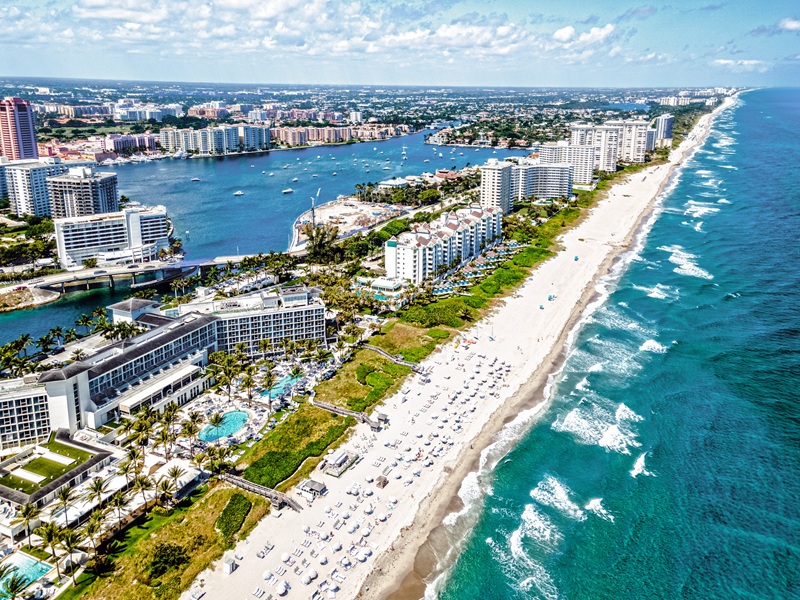
What matters is that this growth is not happening uniformly across Florida. Miami is expanding through luxury consumption and premium positioning, while Orlando is growing through rising critical recognition and increasing market diversity. Even within the same state, Japanese cuisine is evolving in very different ways depending on the city.
These changes are not isolated to Florida alone. They are connected to broader shifts happening throughout the American Japanese food industry, which we discuss separately in “The Current State of Japanese Cuisine in America — Spring 2026.”
Miami: Where Luxury and Japanese Dining Strongly Intersect
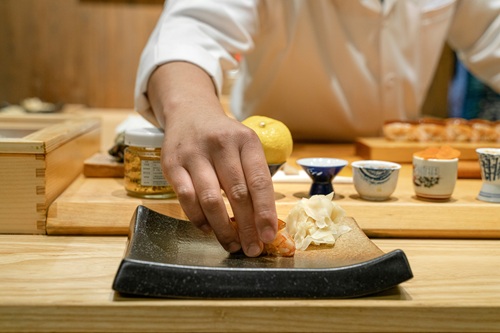
One of the defining characteristics of Miami’s Japanese food scene is the concentration of omakase restaurants. Financial Times noted that Miami’s high-end omakase market expanded significantly after 2021, highlighting restaurants such as Naoe, Shingo, Ogawa, Mila Omakase, and Itamae AO, each with a different concept and direction.
This means more than simply an increase in sushi restaurants. Miami has developed into a market where consumers compare and choose among different luxury Japanese dining experiences.
The Michelin Guide also reflects this trend, with restaurants like Ogawa and Shingo gaining strong visibility as Michelin-starred Japanese establishments. The fact that multiple Japanese restaurants consistently appear within Florida’s Michelin listings suggests that Miami is no longer driven by isolated hype, but has become a continuously evaluated culinary market.
Looking ahead into 2026, the city’s approach to novelty is also changing. Reports indicate that Dubai-born Mimi Kakushi will make its U.S. debut as part of the relaunch of the Delano Miami Beach. This move strongly connects Japanese cuisine with luxury hotels, private membership culture, and international hospitality brands.
In other words, Japanese dining in Miami is becoming integrated into the city’s broader luxury lifestyle ecosystem rather than existing merely as “good restaurants.”
At the same time, Miami is not a city where only traditional Edomae sushi succeeds. Authentic omakase remains important, but Japanese cuisine is also being reinterpreted through Miami’s hotel culture, design sensibilities, nightlife, and multicultural Latin-international identity. Success increasingly depends not only on culinary authenticity, but also on how Japanese cuisine is presented within Miami’s unique cultural context.
Orlando: Evolving from a Tourist City into a Recognized Culinary Market
Orlando’s transformation differs significantly from Miami’s.
Historically, Orlando was often viewed primarily as a tourism-driven city shaped by theme park demand, and Japanese cuisine tended to be discussed within that framework. However, the 2025 MICHELIN Guide marked a major shift when Sorekara earned two Michelin stars, becoming one of the very few two-star restaurants in Florida. Orlando Weekly described it as an exceptionally rare distinction within the state.
Beyond Sorekara, Orlando now includes Michelin-recognized Japanese restaurants such as Kadence and Natsu. Michelin’s Orlando listings also include names connected to Japanese cuisine such as Sushi Saint.
This suggests that Japanese cuisine in Orlando is no longer viewed simply as a safe option for tourists. It is increasingly becoming an established category worthy of independent culinary recognition.
The city’s 2026 developments are equally notable. Sushi Saint, which received a Bib Gourmand designation in downtown Orlando, has reportedly begun expanding with a second location, signaling growing demand for approachable but high-quality Japanese dining experiences such as hand rolls.
Meanwhile, new small-scale omakase concepts like the eight-seat Q Sushi indicate that Orlando’s Japanese food scene is gradually diversifying beyond luxury alone.
This is what makes Orlando particularly interesting. Unlike Miami, where rapid luxury expansion is driven by affluent consumers, Orlando appears to be evolving through a different mechanism: highly rated restaurants are reshaping how the entire market is perceived, allowing new Japanese dining concepts to grow around them.
Even as a tourism-heavy city, Orlando is beginning to develop an independent Japanese food identity beyond tourism itself.
What This Means for Japanese Chefs and Industry Professionals
From a chef’s perspective, one of Florida’s most attractive qualities is that it is not yet as saturated as markets like New York or Los Angeles, while still offering opportunities for strong pricing and professional recognition.
Miami’s expanding concentration of luxury omakase restaurants may continue creating opportunities for chefs experienced in high-end Japanese dining as the city itself grows. Multiple reports and guide evaluations indicate that Miami’s premium omakase segment has continued to expand steadily.
Orlando, on the other hand, currently offers fewer positions than Miami, but the city’s market reputation itself is still rising. Because of that, there may be strategic value in entering the market early.
The emergence of Sorekara’s two-star status, alongside the presence of Kadence, Natsu, Sushi Saint, and Q Sushi, suggests that specialized Japanese dining is gradually becoming rooted within the city’s culinary culture.
Across Florida as a whole, Japanese cuisine is no longer defined simply by easily recognizable sushi-roll concepts. In some cities, consumers increasingly expect comprehensive dining experiences that include counter culture, course composition, atmosphere, and service quality.
For chefs and restaurant professionals, the question is no longer simply where jobs are available, but which city’s cultural and market context best matches their skills and style.
Conclusion
Florida’s Japanese food market is clearly entering its next phase, though the transformation is not happening evenly across the state.
In Miami, luxury omakase and premium Japanese dining are becoming closely linked with the city’s identity as an international luxury destination. In Orlando, rising recognition led by restaurants like Sorekara is helping Japanese cuisine establish itself as a respected fine-dining category, gradually reshaping the city’s overall market perception.
Florida today is no longer simply a place where “sushi is popular because of tourism.” Instead, Japanese cuisine is evolving differently in each city according to distinct local contexts.
Miami is advancing through luxury and international branding. Orlando is growing through rising recognition and market diversification.
Viewed through that lens, Florida is becoming a far more strategic state for the Japanese restaurant industry than it was only a few years ago.
At KIWAMI, we closely monitor these evolving Japanese food markets across the United States and provide early access to job opportunities at emerging and high-profile restaurants.
Whether you want to gain experience in a rapidly expanding luxury market like Miami or pursue opportunities in a rising city like Orlando, we offer career support including confidential job openings.
For overseas career consultations and inquiries:hello@kiwami.io
Latest job listings:https://www.kiwami.io/job-listing
Free registration:Explore your next career opportunity in Florida’s changing Japanese food market.