How Is the Japanese Food Market in Las Vegas Changing?【2026 Edition】 A Sushi and Japanese Dining Market Built by Luxury Hotels, Tourism Spending, and Entertainment
The Japanese food market in Las Vegas has a very different character from other U.S. cities.
It is not a market supported by a massive residential population and a deeply rooted Japanese food culture in the same way as New York or Los Angeles. It is also different from Seattle, where the history of artisan sushi has long been discussed as part of the city’s food culture. Nor is it the same as Denver, where the expansion of the Michelin Guide Colorado has recently made restaurant recognition more visible.
What drives the Japanese food market in Las Vegas is, above all, tourism, hotels, casinos, conventions, entertainment, and business dining.
According to the Las Vegas Convention and Visitors Authority, Las Vegas welcomed 38.5 million visitors in 2025, with 6 million convention attendees, approximately 150,000 hotel rooms, and an annual average occupancy rate of 80.3%. The economic impact of tourism is also significant, with direct visitor spending reaching $55.1 billion in 2024 and total economic impact estimated at $87.7 billion.
Within this massive tourism and hotel economy, Japanese food plays a special role. In Las Vegas, sushi and Japanese cuisine are often consumed not as everyday meals, but as special dining experiences during a trip, business entertainment, anniversaries, pre-nightlife dinners, or luxury hotel experiences.
For that reason, understanding the Japanese food market in Las Vegas requires more than simply asking whether there are many sushi restaurants. It is necessary to look at which hotels these restaurants are located in, what type of guests they target, and what kind of experience they are designed to offer.
Related articles:
How Denver’s Japanese Food Market Is Changing [2026 Edition]
How Houston’s Japanese Food Market Is Changing [2026 Edition]
What Makes a Sushi Chef Capable of Earning a High Salary in the United States? [2026 Edition]
References:
Las Vegas Convention and Visitors Authority: Research Center
Eater Las Vegas: An Eater’s Guide to Dining and Drinking in Las Vegas
Japanese Food in Las Vegas Is Closer to “Experience-Based Consumption” Than Local Food Culture
The Japanese food market in Las Vegas is difficult to explain through daily consumption by local residents alone.
Of course, Las Vegas has sushi restaurants, ramen shops, izakaya-style restaurants, and all-you-can-eat sushi spots for local customers. However, when looking at high-end Japanese restaurants around the Strip, many of them are integrated with hotels, casinos, shows, nightlife, and the overall tourism experience.
For travelers, dining in Las Vegas is not simply about satisfying hunger. It may be dinner before a show, a late-night meal after visiting a casino, business entertainment after a convention, or a special dinner for a birthday, bachelor party, or bachelorette trip. Restaurants are chosen as part of the travel experience.
Eater Las Vegas describes how the city’s dining culture has evolved from a destination once centered on buffets and steakhouses into a broader food city that includes celebrity chefs, global cuisines, and distinctive restaurants beyond the Strip.
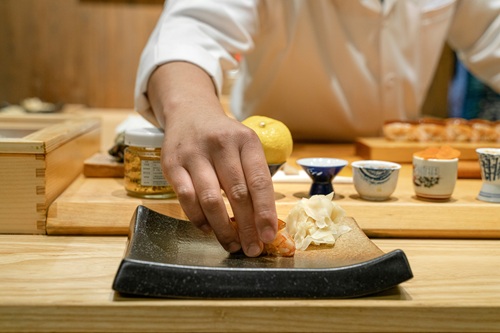
In this context, Japanese food is not just another cuisine category. It becomes part of a Las Vegas-style dining experience with a strong sense of presentation. Sushi, teppanyaki, robata, wagyu, sake, whisky, cocktails, designed interiors, and conversations across the counter all come together. As a result, Japanese dining in Las Vegas becomes less like a simple meal and more like a restaurant experience close to entertainment.
This point is also important for sushi chefs and Japanese cuisine professionals. In Las Vegas, cooking skills alone are not enough. Presentation, pacing, hospitality, English-language explanations, and the ability to serve hotel guests are also strongly required.
Reference:
Eater Las Vegas
Mizumi Shows the Complete Form of High-End Japanese Dining Inside a Hotel
When discussing high-end Japanese dining in Las Vegas, Mizumi at Wynn Las Vegas is a symbolic example.
On the official Wynn Las Vegas website, Mizumi is introduced as a fine dining restaurant centered on Japanese cuisine and seafood. It is described as using fresh fish sourced daily from Japan, along with sustainable ingredients from around the world. The restaurant also brings multiple Japanese dining experiences into one space, including omakase, robatayaki, sushi, teppanyaki, and Sansui Dining overlooking a koi pond.
This clearly reflects the characteristics of the Japanese food market in Las Vegas.
Mizumi is not simply a sushi restaurant. It is a comprehensive Japanese dining experience that combines sushi, teppanyaki, robata, cocktails, sake, a garden-like atmosphere, and the luxury of a hotel setting. In Las Vegas, this type of model—bringing multiple Japanese dining experiences together within one upscale space—is especially well suited to the market.
For tourists, it is easy to choose as a special dinner during a Las Vegas stay. For hotel guests, it offers high-end Japanese dining without leaving the property. It is also suitable for business entertainment and special occasions. At the same time, it can serve guests who want sushi at the counter as well as those who are looking for the theatrical appeal of teppanyaki.
For sushi chefs, this means that simply making sushi is not enough. They must be able to work within a luxury hotel service environment. Cooking, English-language hospitality, teamwork, speed, and an understanding of the guest profile all become important. This kind of comprehensive ability is essential in high-end Japanese dining in Las Vegas.
Reference:
Wynn Las Vegas: Mizumi
Wakuda, Nobu, and Morimoto Show the Strength of Brand-Driven Japanese Dining
In Las Vegas, Japanese dining is strong not only among independent restaurants, but also within global chef brands and hotel brands.
Wakuda at The Venetian Resort is introduced as a restaurant by two-Michelin-starred chef Tetsuya Wakuda and 50 Eggs Hospitality Group. Visit Las Vegas describes Wakuda as a modern Japanese restaurant that combines traditional Japanese flavors with a contemporary sensibility, moving across omakase, izakaya, and fine dining.
Morimoto Las Vegas at MGM Grand is another important example of brand-driven Japanese dining inside a hotel. The official MGM Resorts website presents Morimoto Las Vegas as a restaurant combining contemporary design with Japanese cuisine, featuring elements such as a sushi bar, main dining room, and teppan-style dining.
Caesars Palace is also home to Nobu. As a globally recognized Japanese dining brand, Nobu has become strongly connected to Las Vegas hotel and casino culture. Through Nobu Hotel Las Vegas, the brand extends beyond dining and becomes part of the broader hotel experience.
These brand-driven Japanese restaurants are particularly powerful in Las Vegas. Tourists do not always come to the city after researching its local sushi culture in depth. More often, they choose restaurants based on familiar chef names, well-known hotel restaurants, easy-to-book luxury dining options, and photogenic spaces.
In this sense, the Las Vegas Japanese food market is shaped not only by craftsmanship, but also by brand power, spatial design, hotel operations, and group-level restaurant management.
References:
Visit Las Vegas: Wakuda
Morimoto Las Vegas | MGM Grand
Nobu at Caesars Palace | Las Vegas Advisor
Architectural Digest: Robert De Niro and Nobu Matsuhisa Open Nobu Hotel in Las Vegas
The Japanese Food Market Changes Significantly Between the Strip and Off-Strip Areas
When looking at the Japanese food market in Las Vegas, focusing only on the Strip can lead to an incomplete picture.
The Strip is home to high-end Japanese restaurants such as Mizumi, Wakuda, Nobu, and Morimoto, which are closely connected to hotels and casinos. These restaurants primarily serve tourists, hotel guests, business diners, special-occasion guests, and people dining before nightlife. Price points are high, and atmosphere, presentation, and brand power are especially important.
Off the Strip, however, there are also restaurants that focus more directly on sushi itself. The Eater Las Vegas sushi guide introduces a wide range of options in Las Vegas, from upscale counter-style sushi with around 10 seats to luxurious Japanese lounges and casual sushi restaurants.
Kabuto Edomae Sushi is one of the representative Off-Strip examples. On its official website, the restaurant explains Edomae sushi as a traditional style of sushi that originated around Tokyo, emphasizing an intimate experience between the sushi chef and the guest. The restaurant offers course-based dining with limited seating, designed as an approximately two-hour experience.
This difference is important. Japanese dining on the Strip is strongly tied to hotels, tourism, and presentation. Off-Strip sushi restaurants, on the other hand, reveal a market closer to the food itself, craftsmanship, local sushi enthusiasts, and repeat customers.
For sushi chefs, the skills required also differ depending on where they work. On the Strip, hotel operations, speed, English-language hospitality, large-volume service, and luxury service standards are important. Off the Strip, deeper sushi technique, relationships with regular guests, and a focused counter experience in a limited-seat setting become more important.
References:
Eater Las Vegas: The Best Las Vegas Sushi Restaurants
Kabuto Edomae Sushi Official Website
Bon Appétit: Yui Edomae Sushi
Sushi in Las Vegas Thrives Even Though It Is a Desert City
Las Vegas is not a coastal city. Even so, its sushi market is highly developed.
One reason is the logistics and purchasing power that come with being a hotel and tourism city. Luxury hotels and casino resorts are built on the assumption that they can source high-quality ingredients from around the world. Wynn’s Mizumi officially states that it sources fish daily from Japan, and Eater Las Vegas also introduces high-end sushi restaurants such as Ito at Fontainebleau Las Vegas that fly in fish from Japan.
This shows the unique structure of the sushi market in Las Vegas. It is not a market dependent on local seafood. Instead, high-end sushi is made possible by the purchasing power and logistics network of the hotel and tourism economy.
At the same time, this structure also creates high costs. Sourcing high-quality fish from distant locations involves transportation costs, management costs, product loss, exchange rates, and stability of supply routes. For this reason, high-end sushi restaurants in Las Vegas require not only skill in handling fish, but also an understanding of food cost management and sourcing.
For sushi chefs, this is a major point. In Las Vegas, it is not enough simply to break down fish. Chefs must also be able to use expensive ingredients without waste and maintain consistent quality within the operations of a hotel or restaurant group.
Although Las Vegas is a desert city, it gathers ingredients from around the world and serves high-quality sushi to tourists. This is both the strength and the difficulty of the Japanese food market in Las Vegas.
Reference:
Las Vegas Magazine
Fluctuations in Tourism Also Affect Restaurants
The Japanese food market in Las Vegas is strongly tied to the tourism economy. This is a major strength, but it is also a risk.
According to LVCVA data, Las Vegas welcomed 38.5 million visitors in 2025, and the tourism industry remains enormous. However, 2025 was also a year in which visitor numbers declined from the previous year. The LVCVA research page lists annual visitation at 38.5 million for 2025, and Reuters reported that Las Vegas visitation fell by 7.5% in 2025.
These tourism fluctuations affect restaurants as well. High-end restaurants around the Strip are especially vulnerable to changes in hotel occupancy, airline traffic, conventions, international travel, the broader economy, and consumer spending sentiment. When visitor numbers decline, restaurant reservations, tips, shift planning, and staffing can all be affected.
This does not mean that the Las Vegas market is weak. Even in a year of declining visitor numbers, the city still welcomed 38.5 million visitors, had approximately 150,000 hotel rooms, and hosted around 6 million convention attendees. The overall market scale remains extremely large.
What matters is that the Japanese food market in Las Vegas is sensitive to economic conditions and tourism trends. Sushi chefs and Japanese food professionals working in Las Vegas need to understand not only the strength of the luxury hotel and tourism market, but also seasonality, event demand, conventions, and changes in visitor traffic.
Reference:
Reuters: Las Vegas sees sharp visitor drop as leisure spending wanes
What Kind of Market Is Las Vegas for Sushi Chefs and Japanese Food Professionals?
Las Vegas is a highly distinctive market for sushi chefs and Japanese cuisine professionals.
First, there are opportunities to work inside luxury hotels and casino resorts. This is a very different experience from working at independent restaurants or local neighborhood restaurants in other cities. Las Vegas requires familiarity with hotel service standards, large teams, reservation management, VIP service, convention guests, tourists, and international guests.
Second, the market requires experience not only in sushi, but also in a wider range of Japanese dining categories, including teppanyaki, robata, wagyu, sake, cocktails, lounges, and izakaya-style menus. In cases such as Mizumi, omakase, robata, sushi, and teppanyaki are offered under the same brand. For that reason, not only craftsmanship but also a broader understanding of Japanese cuisine becomes a strength.
English-language hospitality is also especially important in Las Vegas. Since the city attracts tourists, affluent guests, business diners, and international visitors, chefs and service teams are expected to explain dishes, respond to allergies, engage in conversation, and suggest pairings. A chef who can create the right atmosphere at the counter, rather than simply make sushi, is more likely to be valued.
At the same time, Las Vegas depends heavily on tourism, which makes it more exposed to changes in the city’s economy and visitor numbers. Rather than building a long-term base of regular local customers in a stable neighborhood market, success in Las Vegas often requires the ability to perform at a high level within the tourism and hotel economy.
Compared with other cities in Kiwami’s city series, Las Vegas occupies a unique position. It is different from Houston, with its depth as a multicultural living market; different from Denver, where Michelin recognition is emerging; and different from Seattle, where sushi has a longer cultural history. Las Vegas is a Japanese food market supported by tourism, hotels, and entertainment-driven spending.
Related article:
How Much Do Sushi Chefs Make in the United States? [2026 Edition]
Do Sushi Chefs Need a Visa to Work in the United States? [2026 Edition]
References:
Harri Jobs
AP News
Conclusion
The Japanese food market in Las Vegas has a distinctive character that sets it apart from other cities.
It is not a market that has developed mainly around everyday dining culture or a large residential population, as seen in New York or Los Angeles. In Las Vegas, Japanese food is often chosen as part of a hotel stay, casino visit, show, business dinner, anniversary, or nightlife experience. It is frequently consumed as a special dining experience during a trip.
Hotel-based high-end Japanese restaurants such as Mizumi, Wakuda, Nobu, and Morimoto represent this market clearly. Sushi, teppanyaki, robata, wagyu, sake, cocktails, and refined interiors are combined to create a dining experience with a Las Vegas-style sense of entertainment.
At the same time, Off-Strip restaurants such as Kabuto show that there are also restaurants focused more directly on sushi itself. The presence of both Strip-based hotel and brand-driven Japanese dining, and Off-Strip artisan sushi, gives the Las Vegas Japanese food market its unique depth.
Las Vegas is not a coastal city. However, through its luxury hotel economy, tourism spending, logistics networks, and strong purchasing power, it has created a market that can source fish from Japan and serve high-quality sushi and Japanese cuisine to guests from around the world. This is a structure that few other cities can replicate.
For sushi chefs and Japanese cuisine professionals, Las Vegas offers significant opportunities, but it also demands a great deal. English-language hospitality, hotel service standards, speed, presentation, VIP service, cost awareness, and team operations are all important. It is not enough to rely only on craftsmanship. Chefs must be able to create high-value dining experiences within a tourism-driven city.
For those looking to expand their careers as sushi chefs in the United States, Las Vegas is a market worth paying attention to. It is a city where sushi and Japanese cuisine function as high-value dining experiences in a way that differs from New York or Los Angeles.
Kiwami provides job placement support and career consultations for those who want to work in the United States as sushi chefs or Japanese cuisine professionals.
We review each candidate’s experience, preferred location, desired salary, English ability, and current visa or work authorization status, then help organize realistic career options.
If you are considering the next step in your career as a sushi chef or Japanese cuisine professional in the United States, please contact us.
Contact: hello@kiwami.io
Latest job listings: https://www.kiwami.io/en/job-listing
Register for free :Explore new career opportunities in Las Vegas and other Japanese food markets across the United States.